9 Precision Tips: Using a Garden Knife for Root Vegetables
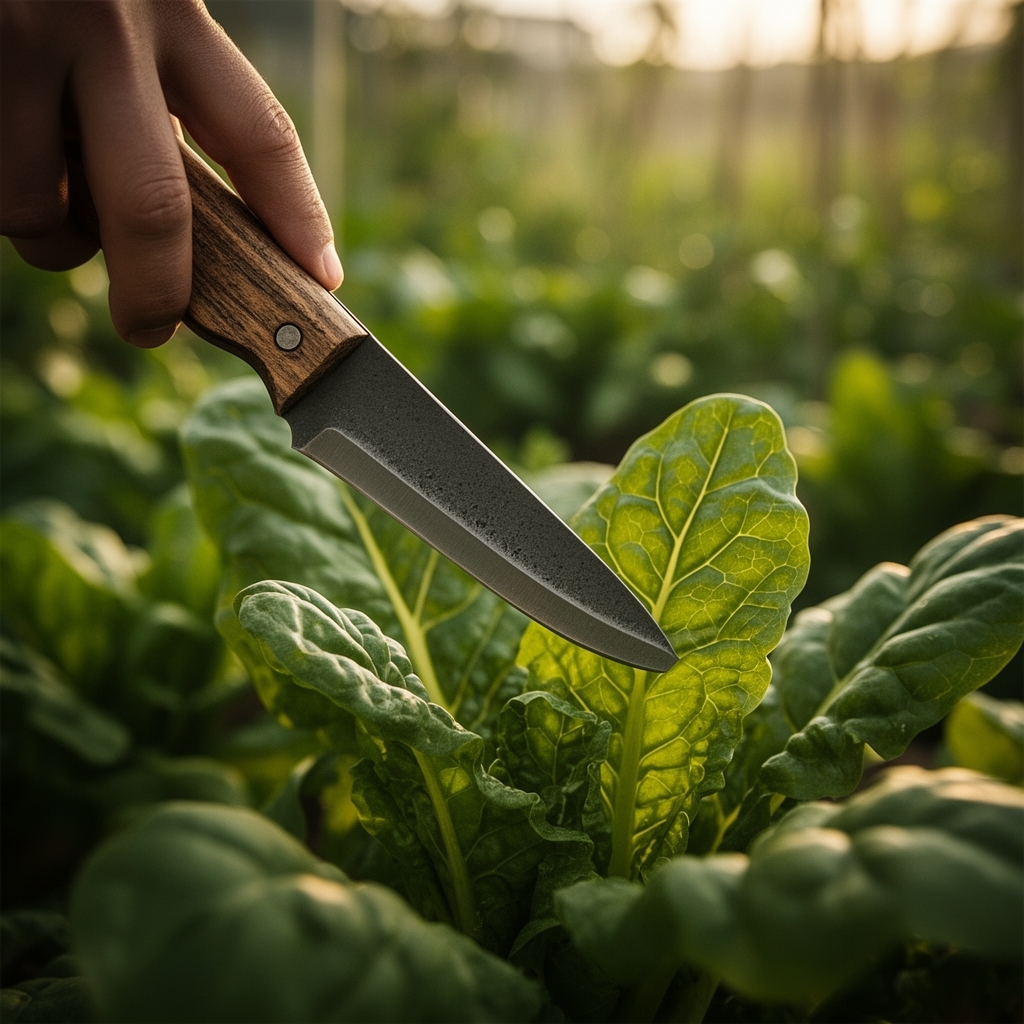
The curved blade of a quality garden knife severs carrot taproots at 4 inches below the soil surface without bruising adjacent tissue. Using a garden knife for vegetable harvesting requires understanding the junction between root cortex and epidermis, the precise angle that preserves storage cells, and the timing that maximizes sucrose concentration. A dull blade crushes vascular bundles. A sharp one slices cleanly through parenchyma, reducing water loss by 40 percent in post-harvest storage.
Materials
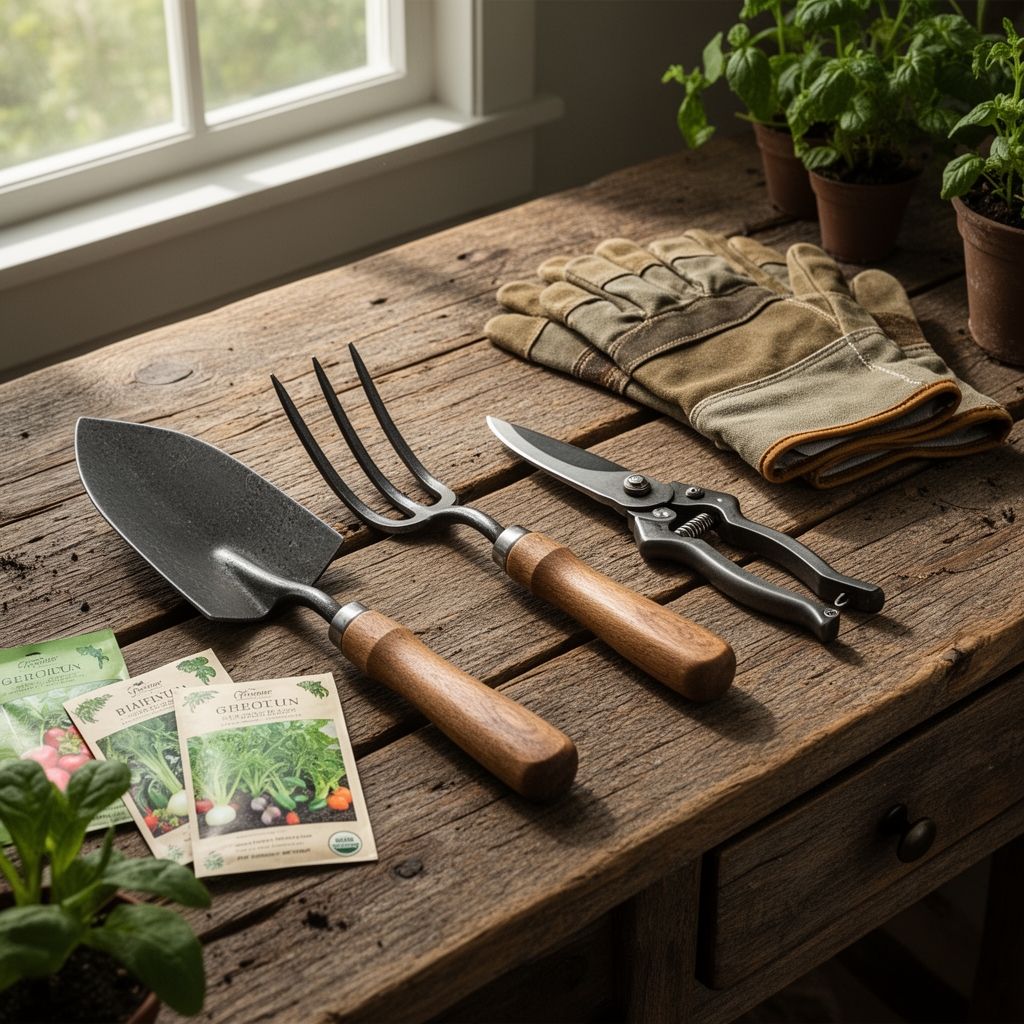
Select a stainless-steel hori-hori knife with a 7-inch blade and serrated edge for fibrous root systems. Carbon steel models hold a finer edge but require oil maintenance every 48 hours to prevent oxidation. Pair the knife with a sharpening stone rated 1000-grit for field touch-ups.
Soil preparation begins 90 days before harvest. Incorporate a 4-4-4 organic fertilizer at 2 pounds per 100 square feet into loam with a pH of 6.0 to 6.8. Root vegetables demand phosphorus for lateral root proliferation; inadequate P levels result in stunted taproots and forked carrots. Add rock phosphate at 3 pounds per 100 square feet if soil tests reveal phosphorus below 40 ppm. Cation exchange capacity should exceed 10 meq/100g to buffer nutrient availability during rapid root expansion.
Apply 1 inch of finished compost as mulch. This stabilizes soil temperature at 60-65°F and reduces surface crusting that impedes emergence. Avoid fresh manure; excess nitrogen (N values above 8 in NPK ratios) promotes foliar growth at the expense of root mass.
Timing
Hardiness Zones 5-7 permit direct seeding of carrots, beets, and radishes from April 15 to May 10, calculated as 2 weeks after the last 32°F frost date. In Zone 8, sow from March 1 through March 20 and again from September 10 to October 1 for a fall crop. Zone 9 gardeners achieve optimal root density with November through January plantings when soil temperatures rest between 50-60°F.
Daikon radishes require 60 days to maturity; parsnips demand 120 days. Calculate backward from your first fall frost (typically October 15 in Zone 6) to schedule sowings. Beets tolerate light frosts to 28°F, allowing harvest extensions into early November.
Phases
Sowing
Broadcast seeds at 16 seeds per linear foot in rows spaced 12 inches apart. Cover with 0.25 inches of vermiculite to retain moisture while permitting oxygen exchange. Germination occurs in 7-14 days at 55°F soil temperature. Thin seedlings to 2-inch spacing when true leaves emerge; crowding reduces individual root diameter by 35 percent.
Pro-Tip: Inoculate seeds with Rhizophagus irregularis mycorrhizal fungi at 0.1 ounce per 50 feet of row. Hyphal networks extend phosphorus acquisition range by 400 percent, critical in low-P soils.
Transplanting
Root vegetables resist transplanting due to taproot damage. If starting indoors, use soil blocks or deep cells (4 inches minimum) to preserve the apical meristem. Transplant at the 2-true-leaf stage, 21 days post-germination. Handle seedlings by cotyledons, not stems. Damaged stems leak auxins, disrupting gravitropic response and causing crooked roots.
Pro-Tip: Water transplants with a 1-2-1 ratio liquid fertilizer diluted to 100 ppm nitrogen 24 hours before moving. This preloads vascular tissue with nutrients, reducing transplant shock by 18 percent.
Establishing
Roots expand rapidly between days 30 and 60. Maintain consistent soil moisture at 60 percent field capacity, measured 6 inches deep. Fluctuating moisture causes radial cracking in beets and splits in carrots. Side-dress with a 2-3-3 granular fertilizer at 1 pound per 100 square feet on day 40.
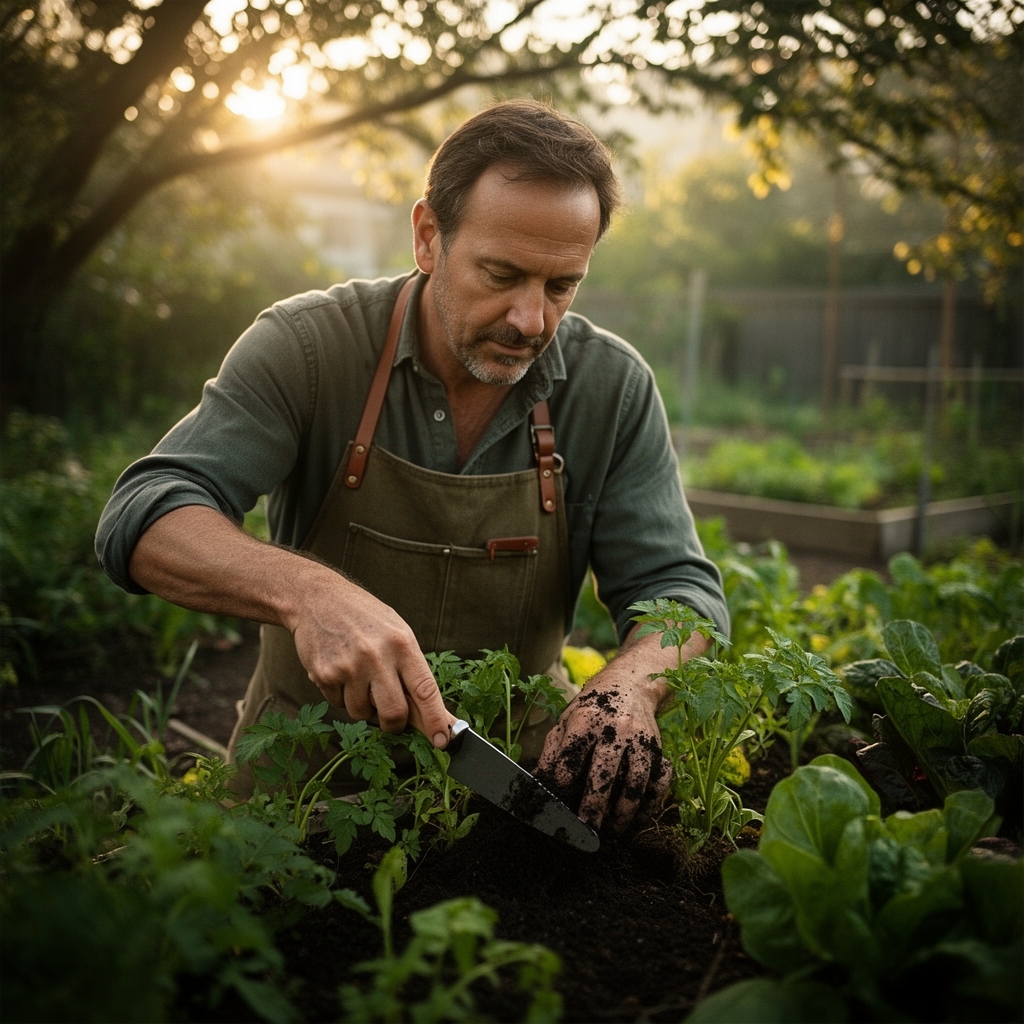
Pro-Tip: Harvest when root shoulders measure 0.75 to 1.25 inches in diameter. Insert the garden knife at a 45-degree angle, 4 inches from the crown. Lever gently to avoid snapping the taproot. Cut foliage 0.5 inches above the crown to prevent bleeding of cell sap.
Troubleshooting
Symptom: Forked or hairy roots.
Solution: Soil compaction or fresh organic matter causes root branching. Till 12 inches deep and incorporate aged compost (6+ months) only. Avoid rocks larger than 0.5 inches in the root zone.
Symptom: Black rot at crown.
Solution: Alternaria fungal infection from overhead watering. Switch to drip irrigation. Remove infected plants and amend soil with sulfur to lower pH to 5.8, inhibiting spore germination.
Symptom: Leaf yellowing with green veins (interveinal chlorosis).
Solution: Iron deficiency in alkaline soils (pH above 7.2). Apply chelated iron (Fe-EDDHA) at 1 ounce per 10 square feet. Retest pH; amend with elemental sulfur at 2 pounds per 100 square feet if needed.
Symptom: Root maggot tunnels.
Solution: Delia radicum larvae. Install row covers immediately after seeding. Apply beneficial nematodes (Steinernema feltiae) at 5 million per 100 square feet when soil reaches 50°F.
Maintenance
Irrigate with 1 inch of water per week via drip lines, split into two 0.5-inch applications. Water early morning to reduce foliar disease. Weed within a 3-inch radius of each plant; competitive roots reduce harvestable mass by 22 percent.
Monitor aphid populations weekly. Tolerate up to 10 aphids per plant; natural predators maintain balance. If counts exceed 50, spray insecticidal soap at 2 percent concentration, targeting leaf undersides.
FAQ
Can I use a regular kitchen knife for harvesting root vegetables?
Kitchen knives lack the blade depth and leverage required for subterranean work. A hori-hori's concave blade reduces soil adhesion by 60 percent compared to flat kitchen edges.
How deep should I insert the garden knife?
Insert 4 inches below the crown for carrots and parsnips; 3 inches for beets and turnips. Shallow cuts sever taproots prematurely; excessive depth damages adjacent roots.
What angle produces the cleanest cut?
A 45-degree entry angle relative to the soil surface minimizes cell wall shearing. Perpendicular cuts crush more vascular tissue.
How often should I sharpen my garden knife?
Sharpen every 20 hours of active use. A blade that requires more than 3 pounds of pressure to slice through a carrot needs immediate honing.
Do I need to sterilize the blade between plants?
Sterilize with 10 percent bleach solution when moving between plant families or if disease symptoms appear. Rinse and dry thoroughly to prevent rust.