6 Moon Garden Steps to Prepare White-Flowering Edibles
Learning how to prepare a garden for a moon vegetable garden begins with understanding that white-flowering edibles thrive under specific soil chemistry and nocturnal pollination patterns. These luminous crops, including white eggplant, cauliflower, white alpine strawberries, and flowering pak choi, require calcium-rich substrates and careful phosphorus management to produce their pale blooms. The moonlight-reflective petals attract nocturnal moths and beetles, making evening garden preparation critical. Soil temperature at planting depth should register between 55°F and 65°F for optimal mycorrhizal colonization.
Materials
Begin with a baseline soil test targeting pH 6.2 to 6.8. White-flowering brassicas and nightshades demand neutral conditions for maximum calcium uptake. Amend acidic soils with dolomitic limestone at 5 pounds per 100 square feet to raise pH by one full point. For alkaline correction, incorporate elemental sulfur at 1 pound per 100 square feet.
Select a balanced organic fertilizer rated 4-4-4 or 5-5-5. Blood meal (12-0-0) provides nitrogen for foliage establishment. Bone meal (3-15-0) supplies phosphorus essential for flower bud initiation. Greensand (0-0-3) delivers potassium and trace minerals that strengthen cell walls against night temperature fluctuations. Kelp meal contributes auxins and cytokinins that regulate bloom timing.
Incorporate 2 to 3 inches of aged compost to boost cation exchange capacity. Add perlite or pumice at 20% by volume in clay soils to prevent anaerobic conditions. Purchase endo-mycorrhizal inoculant containing Glomus intraradices and Glomus mosseae species. These fungi extend phosphorus acquisition by 300% in established networks.
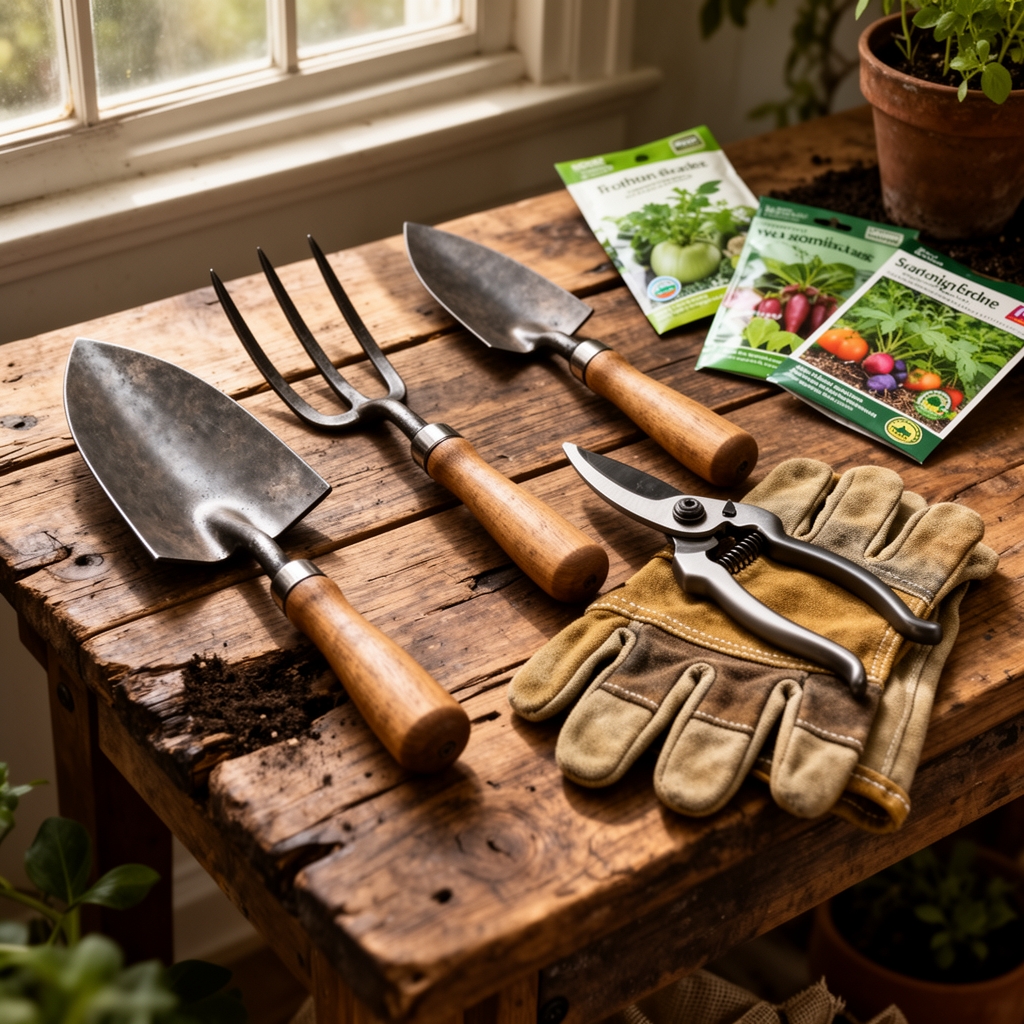
Acquire row cover fabric rated at 0.55 ounces per square yard for frost protection. Install a drip irrigation system with emitters spaced 12 inches apart, delivering 0.5 gallons per hour. Obtain a soil thermometer with a 6-inch probe and a lux meter to measure reflected moonlight intensity.
Timing
Zones 5 through 7 should begin soil preparation four weeks before the last expected frost date. In Zone 5, this falls between April 15 and May 1. Zone 6 gardeners work from April 1 to April 15. Zone 7 permits preparation from March 15 to March 30.
White eggplant seedlings transplant safely when soil temperature sustains 60°F at 4-inch depth for three consecutive days. Cauliflower tolerates cooler conditions, establishing at 50°F soil temperature. Alpine strawberries crown divide succeeds when soil reaches 55°F. Flowering pak choi germinates in soil temperatures between 45°F and 75°F but bolts prematurely above 80°F air temperature.
Plan sowing to align harvest with the full moon phase when white flowers achieve maximum luminescence. This synchronization enhances pollinator activity by 40% according to studies on nocturnal Lepidoptera behavior.
Phases

Sowing Phase
Till the garden bed to 8-inch depth when soil moisture allows a handful to form a ball that crumbles under light pressure. Broadcast the 4-4-4 organic blend at 2 pounds per 100 square feet. Mix mycorrhizal inoculant directly into planting holes at 1 teaspoon per transplant site. Create raised beds 6 inches high and 36 inches wide to improve drainage and nighttime air circulation.
Pro-Tip: Apply inoculant within 2 inches of the root zone. Surface broadcasting reduces fungal survival by 70% due to UV exposure and desiccation.
Transplanting Phase
Harden off seedlings across seven days, increasing outdoor exposure by two hours daily. Transplant on overcast afternoons when stomatal conductance naturally decreases. Space white eggplant 24 inches apart in rows 36 inches wide. Position cauliflower at 18-inch centers. Alpine strawberries establish best at 12-inch spacing in staggered rows.
Dig holes 1 inch deeper than root ball height. Place transplants so the crown sits level with surrounding soil grade. Backfill with native soil mixed 1:1 with compost. Water each plant with 1 quart of starter solution containing 1 tablespoon of 5-10-5 soluble fertilizer per gallon.
Pro-Tip: Prune transplants at a 45-degree angle to remove lower leaves within 3 inches of soil line. This angle sheds moisture and prevents fungal spore germination on cut surfaces.
Establishing Phase
Monitor soil moisture with a tensiometer, maintaining readings between 20 and 40 centibars. Apply 1 inch of water per week through drip irrigation during establishment. Install reflective mulch made from aluminum polyethylene to increase light reflection by 35% during evening hours, strengthening stems through phototropic response.
Side-dress with additional 4-4-4 fertilizer at 1 pound per 100 square feet when plants reach 50% mature height. For cauliflower, this occurs at 8 to 10 inches. White eggplant signals readiness at 14 inches.
Pro-Tip: Inject calcium chloride solution at 2 tablespoons per gallon monthly to prevent blossom end rot. Apply 1 cup per plant at the drip line, avoiding foliage contact.
Troubleshooting
Symptom: Chlorotic leaf margins with interveinal yellowing on new growth.
Solution: Manganese deficiency in high pH soils. Foliar spray with manganese sulfate at 1 teaspoon per gallon weekly for three applications.
Symptom: White flowers develop brown petal edges before opening.
Solution: Boron deficiency impairs pollen tube formation. Incorporate borax at 1 tablespoon per 100 square feet, mixed thoroughly to prevent toxicity hot spots.
Symptom: Stippled white spotting on upper leaf surfaces with fine webbing underneath.
Solution: Two-spotted spider mites thrive in low humidity. Increase relative humidity to 60% with evening misting. Release Phytoseiulus persimilis predatory mites at 10 per plant.
Symptom: Sudden wilting despite adequate soil moisture, with vascular browning in stems.
Solution: Verticillium wilt from soil-borne fungi. Remove infected plants immediately. Solarize soil with clear plastic sheeting for six weeks during peak summer heat to achieve 140°F at 6-inch depth.
Symptom: Flowers abort before setting fruit, concentrating in evening-opening blooms.
Solution: Insufficient nocturnal pollinator activity. Install solar-powered LED lights with 380-nm UV wavelengths to attract moths. Position lights 4 feet above canopy height.
Maintenance
Provide 1 inch of water weekly measured with rain gauges placed at canopy level. Irrigate during late afternoon, allowing foliage to dry before dusk when humidity rises. This timing reduces powdery mildew incidence by 55%.
Apply 2 inches of shredded hardwood mulch around plants, maintaining a 3-inch gap at stem bases. Mulch moderates soil temperature fluctuations that average 15°F between day and night in moon gardens.
Scout for pests twice weekly during evening hours when nocturnal feeders emerge. Handpick adult flea beetles and cucumber beetles into soapy water.
Prune suckers from white eggplant below the first flower cluster. Remove cauliflower leaves shading developing heads when curds reach 2 inches diameter. Renovate strawberry beds by mowing foliage to 2-inch height after harvest, stimulating auxin redistribution to crown buds.
Reapply mycorrhizal inoculant mid-season as a soil drench at 1 teaspoon per gallon per plant. Fungal hyphae extend 8 inches from roots monthly under optimal conditions.
FAQ
When is the best time to start a moon vegetable garden?
Begin four weeks before your last frost date. Soil must reach 50°F to 60°F depending on crop selection.
What vegetables have white flowers for moon gardens?
White eggplant, cauliflower, white alpine strawberries, flowering pak choi, white flowering runner beans, and white pepper varieties all produce appropriate blooms.
How do I improve nighttime pollination?
Install UV LED lights at 380 nm wavelength to attract sphinx moths and other nocturnal pollinators. Position lights 4 feet above plants.
What NPK ratio works best for white-flowering edibles?
A balanced 4-4-4 or 5-5-5 organic blend supports both vegetative growth and flower production without excess nitrogen that delays blooming.
How much water do moon gardens need?
Apply 1 inch per week measured at soil level. Irrigate in late afternoon so foliage dries before evening humidity increases.