7 Best Rust Removers for Reviving Rusty Garden Spades
Garden spades caked in rust lose their ability to penetrate compacted clay and slice through root-bound transplants. The oxide layer increases friction, demands more force per cut, and harbors pathogens that colonize fresh wounds on tubers and rhizomes. Best vegetable garden tool rust removers restore cutting edges to bare metal, extend service life by decades, and prevent the transfer of rust particles into soil aggregates. A properly maintained spade requires 40% less energy per thrust and produces cleaner cuts that heal faster on transplanted brassicas and alliums.
Materials
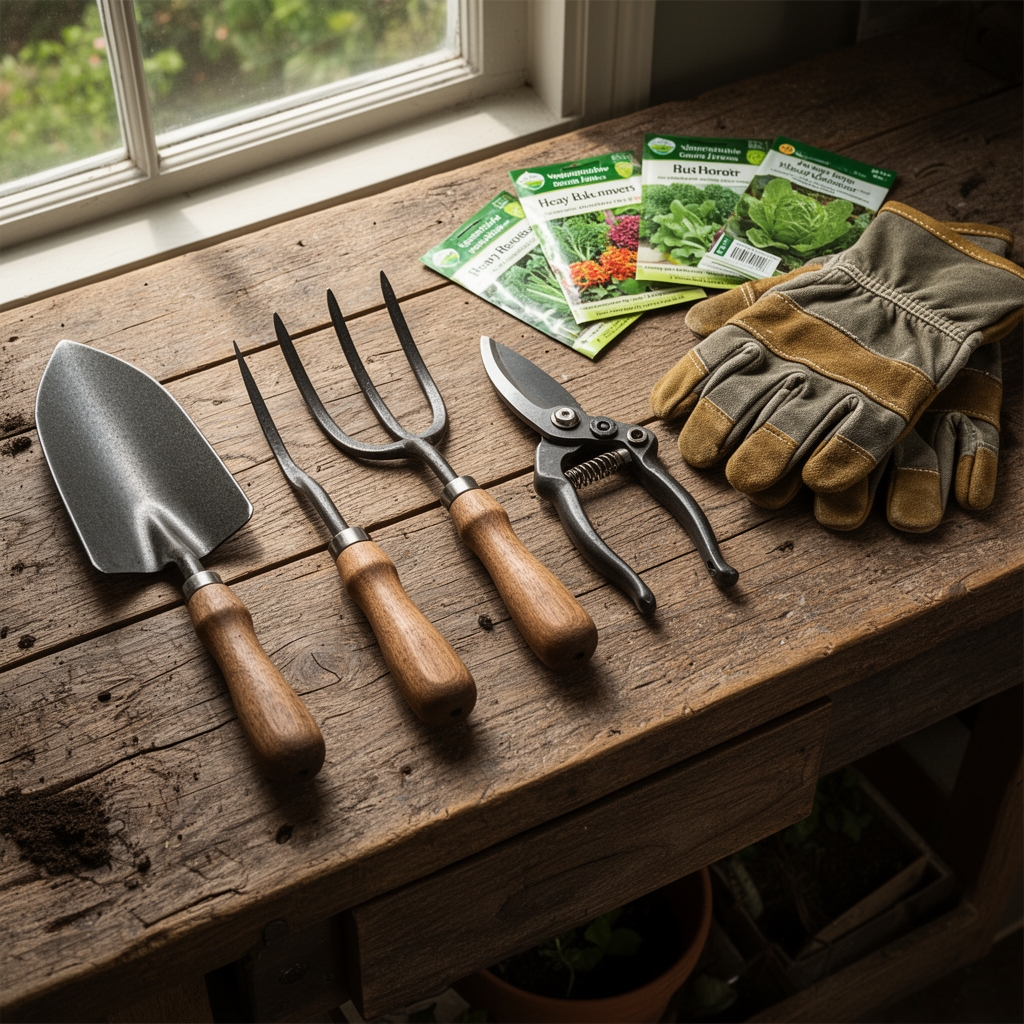
Rust removal demands mechanical abrasion, chemical chelation, or electrochemical conversion. Each method alters surface pH and residue profiles. White vinegar (5% acetic acid, pH 2.4) chelates ferric oxide without leaving chloride salts that accelerate future corrosion. Naval jelly (phosphoric acid at 30%) converts rust to ferric phosphate, a stable black coating with pH 4.5 that functions as a primer layer. Oxalic acid powder (pH 1.3 at 10% solution) penetrates deep pitting and removes tannin stains from oak-heavy compost exposure.
Mechanical methods include wire brush wheels (carbon steel, 0.014-inch filament diameter), sandpaper progressions (80-grit to 220-grit aluminum oxide), and electrolytic baths using washing soda (sodium carbonate, pH 11) as the electrolyte. Lemon juice with salt (citric acid plus sodium chloride) produces localized pH swings between 2.0 and 7.5, useful for spot treatment on forged carbon steel. Baking soda paste (sodium bicarbonate, pH 8.3) offers mild abrasion for light surface oxidation on stainless steel tools.
Commercial penetrants such as WD-40 or PB Blaster contain petroleum distillates (pH 7.0) that displace moisture and lubricate frozen pivot points on pruning shears. Rust converters with tannin-based formulas (pH 3.5) polymerize with iron oxide to form organometallic complexes. Each product leaves residues that affect nutrient availability if tools contact potting mix. Rinse with distilled water (pH 7.0, 0 ppm dissolved solids) and dry immediately to prevent flash rust.
Timing
Begin rust removal during dormancy windows when tool demand drops. In USDA Hardiness Zones 3-5, service tools between November and March when soil frost prevents digging. Zones 6-8 allow maintenance from December through February, aligning with winter pruning of stone fruits and cane berries. Zones 9-11 experience no hard frost, so schedule restoration during the dry season (May through October in Mediterranean climates, December through April in subtropical regions) when reduced irrigation limits garden activity.
Apply rust removers when ambient temperature exceeds 50°F to ensure proper chemical reaction rates. Acetic acid penetration doubles between 50°F and 70°F. Phosphoric acid gels require minimum 60°F for full conversion. Electrolytic processes demand 65°F to 75°F for optimal ion mobility. Avoid freezing conditions; water-based solutions expand and crack microscopic surface fissures, worsening pitting.
Phases

Assessment
Inspect each tool under 500-lumen task lighting at a 45-degree angle to reveal surface texture. Classify rust as light (orange dust, less than 0.5mm depth), moderate (brown scale, 0.5mm to 2mm), or severe (red-black pitting, greater than 2mm with structural compromise). Measure remaining blade thickness with calipers. Discard spades with less than 1.5mm at the cutting edge. Check wooden handles for moisture content below 12% using a pin-type meter; higher readings indicate fungal colonization requiring replacement before rust treatment.
Pro-Tip: Mark the original bevel angle (typically 18 to 22 degrees on quality spades) with permanent marker before abrasive work to maintain cutting geometry.
Removal
For light rust, scrub with 0000-grade steel wool dipped in white vinegar. Work in linear strokes parallel to the blade axis. Reapply vinegar every 45 seconds; evaporation concentrates acetic acid and accelerates action. For moderate rust, apply naval jelly in 1mm layers, wait 20 minutes, then scrape with a plastic putty knife. Flush with water at 60 psi to remove phosphate residue from crevices.
Severe rust requires electrolytic reversal. Submerge the spade blade in a plastic tub containing 1 tablespoon washing soda per gallon of water. Connect the negative lead of a 12-volt battery charger to the blade and the positive lead to a sacrificial steel plate. Run current at 2 amps for 4 to 8 hours. Hydrogen bubbles lift rust into solution; skim foam every hour. Neutralize alkalinity with a 1-minute rinse in 5% vinegar solution, then rinse again with distilled water.
Pro-Tip: Add 1 teaspoon of molasses per gallon to the electrolyte bath; the chelating agents in blackstrap molasses accelerate ferrous ion dissolution by 30%.
Protection
Dry the blade with compressed air at 90 psi to evacuate pores. Heat the metal to 150°F with a heat gun to drive off residual moisture. Apply boiled linseed oil in 0.1mm coats using a lint-free cloth, allowing 24 hours between layers. Three coats provide 18 months of corrosion resistance in humid climates. Alternatively, apply paste wax (carnauba-based, melting point 180°F) for tools stored in conditioned spaces. Wax offers 6 months of protection and reduces soil adhesion by 60%.
Store tools vertically with cutting edges suspended above contact surfaces. Maintain relative humidity below 50% using silica gel packets (indicating type, replace when crystals turn pink). Check edges monthly; reapply oil if water beads fail the contact angle test (droplets should remain convex for 30 seconds minimum).
Pro-Tip: Rub blade surfaces with a raw potato after oiling; oxalic acid in the tuber etches a microscopic texture that improves oil adhesion and reduces glare during use.
Troubleshooting
Symptom: Black staining remains after vinegar treatment.
Solution: Tannin deposits from organic matter contact. Scrub with oxalic acid solution (1 tablespoon per cup water), rinse within 60 seconds, neutralize with baking soda paste.
Symptom: Flash rust appears within hours of cleaning.
Solution: Incomplete drying left moisture in micropores. Repeat heating to 150°F, verify with infrared thermometer, reapply oil immediately while metal remains warm.
Symptom: Pitting worsens during electrolysis.
Solution: Polarity reversal. Verify negative lead contacts the tool, not the sacrificial anode. Incorrect wiring accelerates oxidation instead of reduction.
Symptom: Oil finish feels tacky after 48 hours.
Solution: Excess application or insufficient polymerization. Wipe aggressively with mineral spirits, allow 72 hours in 70°F environment with good air circulation before reapplying thinner coat.
Symptom: Edge geometry changes during abrasive removal.
Solution: Inconsistent pressure or stroke angle. Use a file guide set to original bevel, secure blade in a vise, apply even strokes with a mill bastard file at 15 strokes per minute.
Maintenance
Rinse tools within 30 minutes of soil contact using a hose at 40 psi. Scrub with a stiff natural-fiber brush to remove clay particles before they dry. Dry immediately with an absorbent cloth. Apply a thin coat of oil after every 4 hours of cumulative use. Sharpen cutting edges every 20 hours of operation using a 10-inch mill file at the original bevel angle; 15 strokes per side restores sharpness. Check wooden handles for splinters monthly; sand with 180-grit paper and apply linseed oil to maintain moisture barrier.
Store spades in a tool rack with 2 inches of clearance between implements. Avoid contact with concrete floors; moisture wicks through porous masonry and condenses on metal. Hang tools by holes drilled in handles rather than leaning against walls; vertical storage prevents warping and reduces stress on attachment points. Inspect for rust monthly during growing season, quarterly during dormancy.
FAQ
How long does vinegar take to remove rust?
Light surface rust dissolves in 15 to 30 minutes. Moderate rust requires 2 to 4 hours with reapplication every 30 minutes. Vinegar cannot remove pitting deeper than 1mm.
Can I use sandblasting on garden tools?
Sandblasting (80-grit aluminum oxide at 90 psi) removes rust in seconds but thins blade metal by 0.3mm per minute. Reserve for tools with thick cross-sections exceeding 4mm. Avoid on vintage or precision-forged implements.
Does WD-40 prevent rust long-term?
WD-40 displaces water but evaporates within 2 weeks. Use as a pre-cleaner before applying durable protectants like boiled linseed oil or paste wax. Petroleum solvents attract dust that abrades edges during use.
What causes rust on stainless steel tools?
Stainless steel (300-series, 18% chromium) rusts when chloride exposure exceeds the passivation threshold. Fertilizer salts, seawater, and road de-icers breach the chromium oxide layer. Rinse tools immediately after contact with soluble salts.
How do I restore wooden handles with rust stains?
Sand to bare wood using 120-grit paper. Apply oxalic acid solution (2 tablespoons per cup), scrub with a nylon brush, rinse after 10 minutes. Neutralize with baking soda, dry 48 hours, then apply three coats of boiled linseed oil at 24-hour intervals.